Quick Answer: Hydro jetting is better than snaking for old pipes sometimes if the pipe is structurally intact and the clog is caused by grease, soap scum, scale, or light root intrusion that coats pipe walls. Snaking is usually better for single, localized blockages, fragile clay lines, or when you need foreign object retrieval fast. The safest decision comes from a quick pipe condition assessment (often with a camera) so pressure and tools match the pipe material, age, and risk.
Start With Safety-Old Pipes Fail From Condition, Not Age
If you’re asking is hydro jetting better than snaking in an older building, the “right” answer depends on whether your line can tolerate pressurized water and high-pressure water jets without worsening weak points.
A lot of homeowners’ first search is hydro jetting safe for old pipes because they’re worried about blowouts. That’s the right instinct: hydro-jetting can be incredibly effective, but only when used on piping that can handle it, especially in older systems where prior corrosion or shifting has already taken a toll.
Key reality: pipe age is a clue, but pipe condition assessment is the deciding factor. A 50-year-old line can be stable; a 10-year-old line can be compromised.
What Hydro-Jetting Actually Does Inside Old Lines
Hydro-jetting uses a specialized hose with multi-directional nozzles to blast pressurized water through the line. Instead of only opening a path, it scours pipe walls and removes residue like:
- Grease buildup
- Soap scum
- Scale / mineral deposits
- Sludge
- Light root intrusion that clings to the interior
That “scrubbing” matters because older pipes often suffer from narrowed diameter caused by years of buildup. When people ask is hydro jetting better than snaking, they’re often really asking: “Which one actually cleans the pipe, not just clears it?” In that sense, hydro jetting behaves like a deep clean that targets the entire full pipe diameter cleaning zone.
Quick Tip: If your drains “work for a week” after a cleaning and then slow again, that’s usually residue left behind on the pipe walls, not a brand-new clog.
What Snaking Really Does (and Why It’s Often Safer First)
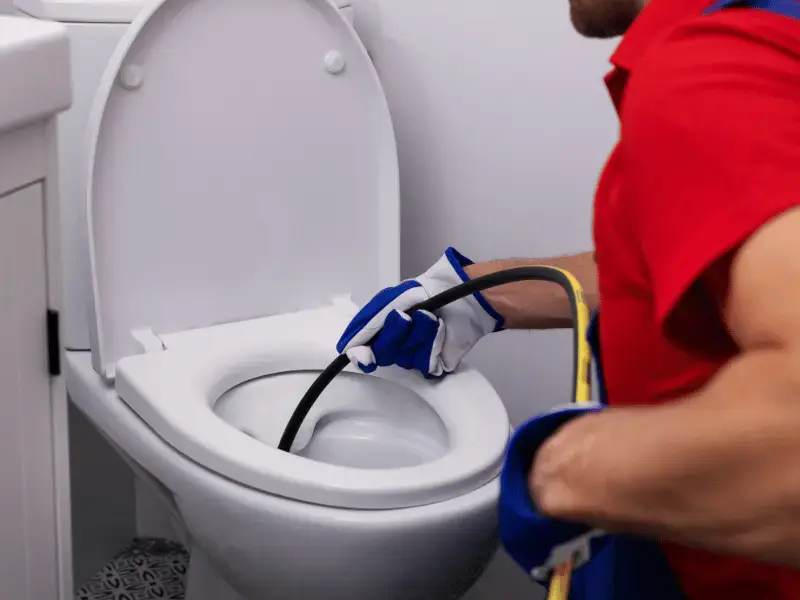
Drain snaking (also called traditional snaking, cabling, or augering) uses a rotating steel cable (a drain auger) to punch through or grab a clog. It’s typically a targeted clog removal method meant for:
- Localized blockages near fixtures
- Soft obstructions (hair, paper, small buildup clumps)
- Situations where you need foreign objects retrieved (kids’ toys, caps, etc.)
Because the cable mainly opens a channel, you often get flow restoration without the “scrub.” That’s why snaking can be a fast relief but not always long-lasting when the real issue is coating along the walls.
This is where the difference between snaking and hydro jetting a drain becomes practical: snaking is “break through,” jetting is “clean out.”
Old Pipe Materials Change the Answer
When people ask if hydro jetting is better than snaking, they often forget that “old pipes” can mean very different materials. Here’s how pipe material changes the risk and results:
Common Older-Material Behaviors
- Clay laterals / clay pipes: prone to cracking, joint separation, and shifting
- Cast iron laterals: can develop heavy scaling and corrosion that narrows the line
- PVC drains / PVC pipe: smoother interior; usually responds very well to controlled jetting
Older systems can also have unknown transitions, offsets, or prior patchwork repairs so you’re not only choosing a method; you’re choosing a risk profile.
Quick Fix: If you suspect a fragile line but need drainage today, snaking first can restore basic function so you can schedule proper evaluation before attempting jetting.
The #1 Rule Before Jetting: Inspect First (Especially in Old Pipes)
The safest “pro move” is simple: start with camera inspection especially when your piping age/material is uncertain. This is where trained camera inspection experts matter, because a quick look reveals issues that change the plan.
A proper video camera inspection can identify:
- Structural defects
- Fractures and corrosion pockets
- Pipe offset / offsets
- A collapsed pipe risk
- Buildup type and density
- Root intrusion patterns
Once you can see the line, pressure choices become controlled, not guesswork. That’s the line between “successful clean” and “accidental damage.”
Which Method Fits the Pipe and the Clog?
Below is a practical comparison you can use before spending time and money repeating the wrong solution.
Situation (Old-Pipe Clue) | Hydro-Jetting Fit | Snaking Fit | Why It Matters |
Single sink/tub is slow | Sometimes | High | Likely localized clog near fixture |
Multiple fixtures affected | High | Medium | Often main sewer lines issue |
Recurring clogs every few weeks | High | Medium | Wall buildup suggests “scrub needed” |
Suspected fragile clay line | Low | High | Cable is gentler than high pressure |
Heavy grease/soap scum coating | High | Low | Jetting cleans pipe walls thoroughly |
Need object pulled out (toy/cap) | Low | High | Snaking enables foreign objects retrieval |
Light roots + intact pipe | High | Medium | Jetting clears roots + buildup |
Visible offset/collapse on camera | Low | Medium | Cleaning won’t fix a structural failure |
When Hydro Jetting Is Usually Better for Old Pipes
Hydro Jetting is often better for old pipes because it targets the “whole-pipe” problem instead of a single choke point.
Hydro Jetting Tends to Win When
- The pipe can handle controlled pressure
- The clog source is coating (grease/scum/scale)
- The issue is in long runs or main sewer lines
- You want longer relief from recurring blockages
It’s especially common in older cast iron systems where scale and corrosion products narrow the diameter. A well-controlled jet can remove years of buildup that a cable can’t fully clear.
Quick Tip: In food-heavy homes or multi-tenant buildings, grease + soap film can behave like “pipe cholesterol.” Snaking pokes a hole; jetting scrubs the lining.
When Snaking Is Usually Better (and Sometimes the Only Safe Option)
Is hydro jetting better than snaking for every old pipe? No because some lines are too fragile, and some clogs are too localized to justify high-pressure cleaning.
Snaking is often the smarter call when:
- You have a one-time blockage near a fixture
- Your line is fragile clay or visibly compromised
- You’re dealing with a single obstruction that needs retrieval
- You need a fast access-point solution like snaking a cleanout to restore flow before deeper diagnostics
Snaking also makes sense as the “first move” for safety: clear enough to drain, then inspect, then decide if jetting is worth it.
The “Old Pipe” Red Flags That Should Change Your Plan
If any of these are true, move slowly and avoid guesswork:
- The line has had repeated backups for years
- You’ve had multiple “quick clears” with fast relapse
- You smell sewer odor near floor drains
- Multiple fixtures gurgle at the same time
- You’ve had landscaping/root issues in the yard
If you suspect deeper restrictions, you’re no longer choosing between gadgets you’re choosing between sewer line cleaning methods based on risk.
Step-by-Step: How Pros Decide Safely
Here’s the safest framework a good team uses (and what you should expect from professional drain cleaning technicians):
- Scope the symptoms: one drain vs. whole system, upstairs vs. basement
- Check access points: cleanout availability and distance to suspected blockage
- Run a camera inspection: confirm pipe condition and clog type
- Match method to material: clay vs cast iron vs PVC
- Set controlled pressure: use only what the pipe can tolerate
- Confirm results: post-cleaning check for wall residue and structural defects
- Plan prevention: usage changes, schedule, and early warning signs
This approach prevents the common mistake: choosing jetting because it’s “stronger,” when snaking (or repair) is actually safer.
Hydrojet vs Snake: Old-Pipe Performance Comparison
This table summarizes what you gain and what you risk.
Feature | Hydro-jetting | Drain Snaking |
Primary action | Scrubs and flushes pipe interior | Breaks through or grabs obstruction |
Cleans pipe walls | Yes (deep clean) | Not fully (often leaves residue) |
Best for | Recurring blockages, long runs, grease/scale | Localized clogs, fragile lines, object retrieval |
Risk in fragile old lines | Higher if pipe is compromised | Lower (gentler approach) |
Typical outcome | Longer relief, better diameter restoration | Fast relief, may relapse sooner |
Works well on roots | Good for light roots | Limited; may leave fragments |
What Hydro Jetting Removes That Snakes Often Don’t
A snake can open flow but leave deposits behind. Hydro-jetting tends to remove:
- Grease buildup from kitchen lines
- Soap scum layered with hair and residue
- Scale / mineral deposits that narrow older pipes
- Sludge that clings to the bottom of long runs
- Light root intrusion (especially early-stage)
That’s why, in many intact older systems, is hydro jetting better than snaking becomes a “yes” when the issue is coating, not a single hard plug.
When to “Snake First, Jet Later” (The Safer Two-Step Strategy)
A common best-practice is: snake enough to restore drainage and allow inspection, then jet if the pipe can tolerate it.
This is especially helpful if you have:
- A heavy backup and need immediate relief
- Uncertainty about old clay sections
- A system where you suspect mixed materials
- A long run where deposits are likely but you want proof first
This can be the difference between a controlled cleaning and an expensive surprise.
Homeowner Checks That Help You Choose the Right Method
You can’t see inside the pipe, but you can spot patterns that guide the decision:
- One fixture slow → likely localized; snaking often works
- Many fixtures slow → likely main line; jetting may be better (if intact)
- Repeats after “quick clears” → residue and buildup; jetting likely helps
- Gurgling + odor → deeper restriction; inspect first
- Backups after storms/soil saturation → possible offsets/collapse; inspect first
- Old clay/cast iron unknown condition → avoid high pressure until verified
If you’re repeatedly dealing with system-wide issues, you’re likely beyond “spot-clearing” and into cleaning sewer line territory.
“Quick Fixes” That Reduce Risk Before Any Cleaning
You can’t permanently solve a deep obstruction with a hack, but you can reduce damage while planning:
- Quick Fix: Stop using chemical drain cleaners (they can worsen corrosion and create safety hazards).
- Quick Fix: Reduce water load (delay laundry/dishwasher runs) until flow is stable.
- Quick Fix: If only one fixture is slow, avoid “whole-house” high-pressure decisions start targeted.
- Quick Fix: Document when backups happen (after cooking days, storms, multiple fixtures) to help diagnosis.
Quick Tip: If you have an older system and you’re unsure, start with inspection guessing wrong is what causes repeat calls.
The Pressure Question-Why “Too Much PSI” Isn’t a Myth
Many homeowners hear scary stories about jetting “blowing out pipes.” The real cause is usually jetting a line with existing defects (cracks, corrosion, offsets) at the wrong pressure.
A trained technician controls pressure based on:
- Material strength (cast iron vs clay vs PVC)
- Existing corrosion/scaling
- Joint integrity
- Distance and access
- Severity/type of obstruction
If you’re unsure which method is safer for your older pipes, working with a trusted local plumbing company makes a major difference. Local professionals understand regional soil movement, common pipe materials used in older neighborhoods, and how aging sewer laterals typically fail. That local insight helps prevent over-aggressive cleaning methods and ensures hydro jetting or snaking is matched correctly to your pipe condition.
Real-World Scenarios (Old Pipes) That Make the Decision Obvious
- Scenario A: Kitchen line slows after heavy cooking: This is classic grease + film coating. A snake restores flow, but buildup returns. If the pipe is intact, is hydro jetting better than snaking often becomes yes because it cleans the coating off the walls.
- Scenario B: Basement drain gurgles when toilets flush: That’s a system signal often near main line restrictions. Inspection helps confirm whether the issue is buildup, roots, or offsets. If intact, jetting tends to provide longer relief.
- Scenario C: Older clay line with repeated backups and yard roots: If inspection shows cracks or offsets, snaking may be safer temporarily while planning repair. Jetting a compromised clay line can worsen defects.
The Bottom Line for Old Pipes (Simple Rule You Can Trust)
So, is hydro jetting better than snaking for old pipes?
- Yes, when the pipe is intact and the problem is widespread buildup that needs a deep clean.
- No, when the pipe is fragile or structurally compromised, or the clog is a localized plug that needs targeted removal.
- Always inspect first when pipe condition is unknown, especially with clay and older cast iron.
Done right, both methods have a place. The “best” choice is the one that matches pipe condition and clog type without creating new damage.
Get Help Choosing the Safest Option for Older Pipes
If you’re in Chula Vista or nearby areas of San Diego County and you want a clear, low-risk plan for stubborn drain issues, DR HOUSE INC can help you diagnose the line, choose the right cleaning method, and avoid unnecessary repeat clogs. Call: 8587037536 to schedule an evaluation and get your drains flowing with the safest approach.
FAQs About Hydrojet vs Snake
Can hydro jetting damage older pipes?
It can if the pipe has cracks, offsets, corrosion weak points, or joint failures. That’s why a camera inspection first is the safest way to choose pressure and method.
Is snaking enough for recurring clogs?
Snaking often restores flow, but recurring clogs usually indicate pipe-wall residue like grease, soap scum, or scale that snaking may not fully remove.
What clogs does hydro jetting remove best?
Hydro jetting is best for grease, soap scum, mineral scale, sludge, and light roots that coat pipe walls and reduce pipe diameter.
What clogs does snaking remove best?
Snaking works best for localized obstructions near fixtures and for retrieving foreign objects that a water jet would push deeper.
Do I always need a camera inspection before jetting?
If pipe condition is uncertain especially in older cast iron or clay lines a camera inspection is strongly recommended to avoid high-pressure damage.
How do I know it’s a main line issue?
If multiple fixtures are slow, you hear gurgling, or you get backups at the lowest drain (like a basement floor drain), the restriction may be in the main line.