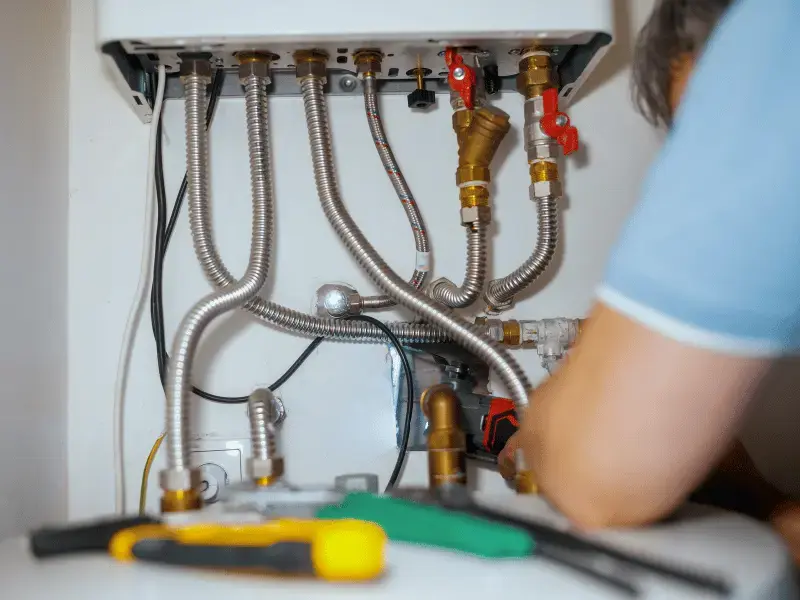
Quick Answer: Water heater dripping from the pressure relief valve usually means the tank is experiencing excess pressure, excess heat, or the valve can’t seal due to wear, debris, or corrosion. The T&P valve is a critical safety device designed to open around 150 PSI or 210°F to prevent dangerous over-pressurization. In many cases, the drip is triggered by thermal expansion in a closed system especially when there’s no working expansion tank. Treat steady dripping as a warning sign, not a nuisance, because it can lead to rust, water damage, and premature tank failure.
What the Pressure Relief Valve Does and Why It Drips
A water heater tank has a built-in safety mechanism called the temperature and pressure relief valve (T&P valve / TPV valve). It’s connected to a pressure relief valve discharge pipe that directs hot discharge downward to reduce scalding and damage.
When internal tank pressure or water temperature climbs too high, the valve opens slightly to relieve pressure buildup. Occasional release after heavy hot water use can be normal but if the water heater dripping from the pressure relief valve becomes steady or daily, the underlying cause needs attention.
In winter, cold weather affects hot water heater pressure because colder incoming water forces longer heating cycles, increasing thermal expansion events and stressing safety components.
Is This Dangerous or Normal?
A small, one-time drip can be normal if the tank just finished a long heating cycle. But persistent discharge changes the risk level. Use this rule:
- Occasional drip (rare, short-lived): monitor
- Continuous drip (hours/days): diagnose immediately
If you’re asking if a leaking pressure relief valve is dangerous, the honest answer is: it can be not because the drip itself is explosive, but because it often signals overheating, over-pressurization, or a failing safety component.
Tip: If the discharge pipe is hot to the touch or the dripping increases during heater cycles, treat it as pressure/temperature related not random leaking.
The 6 Most Common Causes of a Dripping T&P Valve
A water heater dripping from pressure relief valve typically comes from one of these causes:
1) High Water Pressure in the Home
Normal household pressure is usually 40-80 PSI. If a pressure regulator (PRV) fails, pressure can rise and trigger the valve.
This is also why some people describe it as water heater pressure valve dripping even when the tank itself is fine.
2) Thermal Expansion in a Closed Plumbing System
In a closed plumbing system, heated water expands but has nowhere to go so pressure climbs and the valve relieves it.
This is one of the biggest reasons for water heater leaking pressure relief valve issues in newer homes with backflow protection.
3) Worn Valve Seat, Mineral Buildup, or Corrosion
Hard water minerals can leave deposits on the valve seat. Mineral buildup inside valve, corrosion on valve seat, or grit prevents sealing, creating slow dripping.
4) Overheating From Thermostat Problems
If the thermostat overheats the water (especially in electric water heaters), it can trigger discharge. Remember the critical limit: 210°F at the valve.
5) Sediment Buildup in the Tank
Sediment buildup in the tank insulates heat at the bottom, increases overheating hotspots, and can contribute to erratic pressure behavior. This is common with hard water and missed maintenance.
Lorem ipsum dolor sit amet, consectetur adipiscing elit. Ut elit tellus, luctus nec ullamcorper mattis, pulvinar dapibus leo.
6) Improper Installation or Wrong Valve Rating
A loose fitting, poor sealant, cross-threading, or an incorrect valve rating can cause leaking from day one.
This is often described by homeowners as t and p valve leaking right after replacement.
Quick Safety Steps Before You Troubleshoot
If the water heater dripping from the pressure relief valve is steady, prioritize safety.
Immediate Safety Checklist
- Keep children/pets away from the discharge pipe (hot water can scald).
- If the leak is heavy, shut off the cold water inlet valve to reduce flow.
- Turn off power: breaker for electric water heaters, or set gas to pilot.
- Let the tank cool 30–60 minutes before touching the fittings.
- Check for pooling water. Water damage can spread fast.
- If the drip is a spray or gush, stop using hot water and call a pro.
Symptoms, Likely Causes, What to Do
What you see | Likely cause | What to do first |
Drip after long showers | Thermal expansion | Check expansion tank, measure pressure |
Constant drip day/night | Worn valve, debris, corrosion | Test lever once, consider replacement |
Drip + very hot water | Thermostat overheating | Verify temp, reduce setpoint |
Drip + banging noises | Sediment buildup | Schedule tank flush |
Leak at threads | Installation/seal issue | Re-seat with proper thread seal |
Water Temperature Settings That Trigger Problems
Many leaks begin with temperature being too high. The safest, most efficient baseline for most homes is a water heater recommended temperature of about 120°F (with household needs and scald risk considered).
If you’re seeing a hot water overflow valve leaking, check whether the temperature has been turned up for winter comfort. Higher temps = more expansion and more pressure events.
Quick Fix: If the temperature is set unusually high, reduce it gradually and monitor for 24 hours.
Expansion Tank Problems That Cause Dripping
A very common missing piece in competitor articles is explaining how expansion tanks fail and how that failure looks in real life.
The purpose of an expansion tank on a water heater is to absorb thermal expansion pressure so the T&P valve doesn’t become the pressure outlet.
Signs the expansion tank may be failing:
- Dripping happens most during heating cycles
- Pressure swings are noticeable at fixtures
- The tank feels waterlogged/heavy
- Dripping started after PRV/backflow device installation
Also note: If you’re dealing with backflow preventer leaking, it can indicate pressure regulation/thermal expansion issues elsewhere in the system not just at the heater.
How to Confirm It’s the Valve (Not Another Leak)
Water at the top of a tank can come from multiple sources. Dry the area and watch carefully:
Check nearby components:
- Valve body and threads (seepage at connection)
- Discharge pipe end (dripping from the pipe)
- Cold water inlet valve and fittings
- Hot water outlet pipe and connections
If it’s truly a water heater leaking from a relief valve, the water usually appears at the valve outlet or exits via the discharge pipe.
How to Test the T&P Valve Safely
If you suspect debris in the valve seat, a controlled test may flush it if done carefully.
This step also covers the intent behind testing a water heater pressure relief valve.
Safe Valve Test Steps
- Place a bucket under the discharge pipe termination.
- Stand clear of the pipe opening (hot water risk).
- Lift the valve test lever for 1–2 seconds, then release.
- Water should surge briefly, then stop fully.
- If it won’t stop, turn off the cold water inlet valve and call a pro.
- If it drips afterward, the valve may be worn or debris is trapped.
If you’re asking about a water heater leaking from the pressure valve, this test helps separate stuck debris from failed valve seat.
Pressure/Temp Readings and What They Mean
Measurement | Normal range | If it’s high | Likely fix |
House water pressure | 40–80 PSI | 90+ PSI | Check PRV, add expansion control |
Valve trip pressure | ~150 PSI | Frequent spikes | Expansion tank / PRV issue |
Water temperature | ~120°F | 130–140°F+ | Lower thermostat, inspect controls |
Tank age | 8–12 yrs typical | 10–12+ yrs + issues | Consider replacement |
Use a pressure gauge testing method at a hose bib or near the heater to confirm pressure behavior over time.
Fixes That Actually Stop the Drip
If you want to fix water heater pressure relief valve dripping for good, match the fix to the cause:
Proven Fix Options
- Replace the relief valve if it’s worn, corroded, or won’t reseal
- Install/replace an expansion tank if thermal expansion is confirmed
- Correct high house pressure (PRV adjustment/replacement)
- Flush the tank to remove sediment buildup in tank
- Correct improper installation (reseal threads, correct valve rating)
If the valve body shows rust, scaling, or pitting, that’s often a safety relief valve leaking due to a failing seal, not something a tighten can permanently solve.
When Dripping Means the Heater Might Be Near End-of-Life
A valve replacement can be a simple fix, but sometimes persistent water heaters dripping from pressure relief valve signals deeper tank issues.
Watch for
- Rust at the base or under insulation (hidden corrosion)
- Repeated valve replacements with recurring dripping
- Poor recovery, discolored water, or banging noises
- The tank is 10-12 years old and maintenance has been minimal
Also inspect the anode rod condition, dip tube inside tank, and drain valve condition during annual service; these often reveal overall tank health. When repeated valve replacements fail to stop the issue, it’s often time for a deeper system evaluation by a best plumbing firm that can assess internal tank pressure behaviour, expansion tank performance, and overall water heater safety, not just swap parts and move on.
Winter-Specific Triggers Most Articles Miss
Here are winter triggers that often get skipped but matter for rankings and real-world troubleshooting:
Winter Triggers That Increase Dripping
- Longer heating cycles from colder incoming water
- Higher thermostat settings just for winter
- More back-to-back showers causing repeated expansion events
- Garage/basement temperature swings stressing components
- Minor valve seat debris becoming constant with frequent cycling
When to Call a Pro
If the valve is stuck, corroded, or pressure is consistently high, bring in a water heater repair specialist to diagnose safely. This is especially important if:
- the leak turns into a stream/spray
- the valve won’t reseal after a lever test
- house pressure is above normal range
- you suspect closed-system expansion issues
A reputable team can also check PRV behavior, confirm expansion tank sizing, and verify installation meets safety standards.
Call to Action - Get Safe, Reliable Help From DR HOUSE INC
If your water heater is dripping, don’t wait for rust, flooding, or a full failure. The safest approach is to diagnose pressure and temperature correctly, then fix the root cause fast.
DR HOUSE INC
📞 (858) 703-7536
FAQs About Water Heater Dripping From Pressure Relief Valve
Why is my water heater dripping from the pressure relief valve?
A water heater dripping from a pressure relief valve usually means excess pressure, excess heat, thermal expansion, or a valve that can’t seal due to debris, mineral buildup, or corrosion.
Is it normal for a T&P valve to drip sometimes?
Occasional discharge can happen after heavy hot water use, but frequent dripping suggests an underlying pressure/temperature or valve wear issue.
How do I know if it’s dangerous?
If you’re wondering if a leaking pressure relief valve is dangerous, treat continuous dripping as urgent especially if water is very hot, pressure is high, or the valve won’t reseal.
What if I see leaks elsewhere too?
If you also have backflow preventer leaking, you may have a pressure regulation or thermal expansion problem affecting multiple components.
Can I fix it myself?
Basic checks and a careful lever test are possible, but replacing valves, correcting PRV issues, and addressing expansion tank problems are best handled by professionals for safety.